Guacamayas are what locals call macaws, and the mountains just past Puerto Vallarta are one of the few places in Mexico where you can still hear a wild pair calling across a canyon. Head inland from Banderas Bay and the forest gets loud in the best way. Here at Vallarta Adventures, we'll walk you through what makes these birds worth the trip, where to look for them, and how to plan a day around them.
Discover 10 Interesting Facts About Macaws
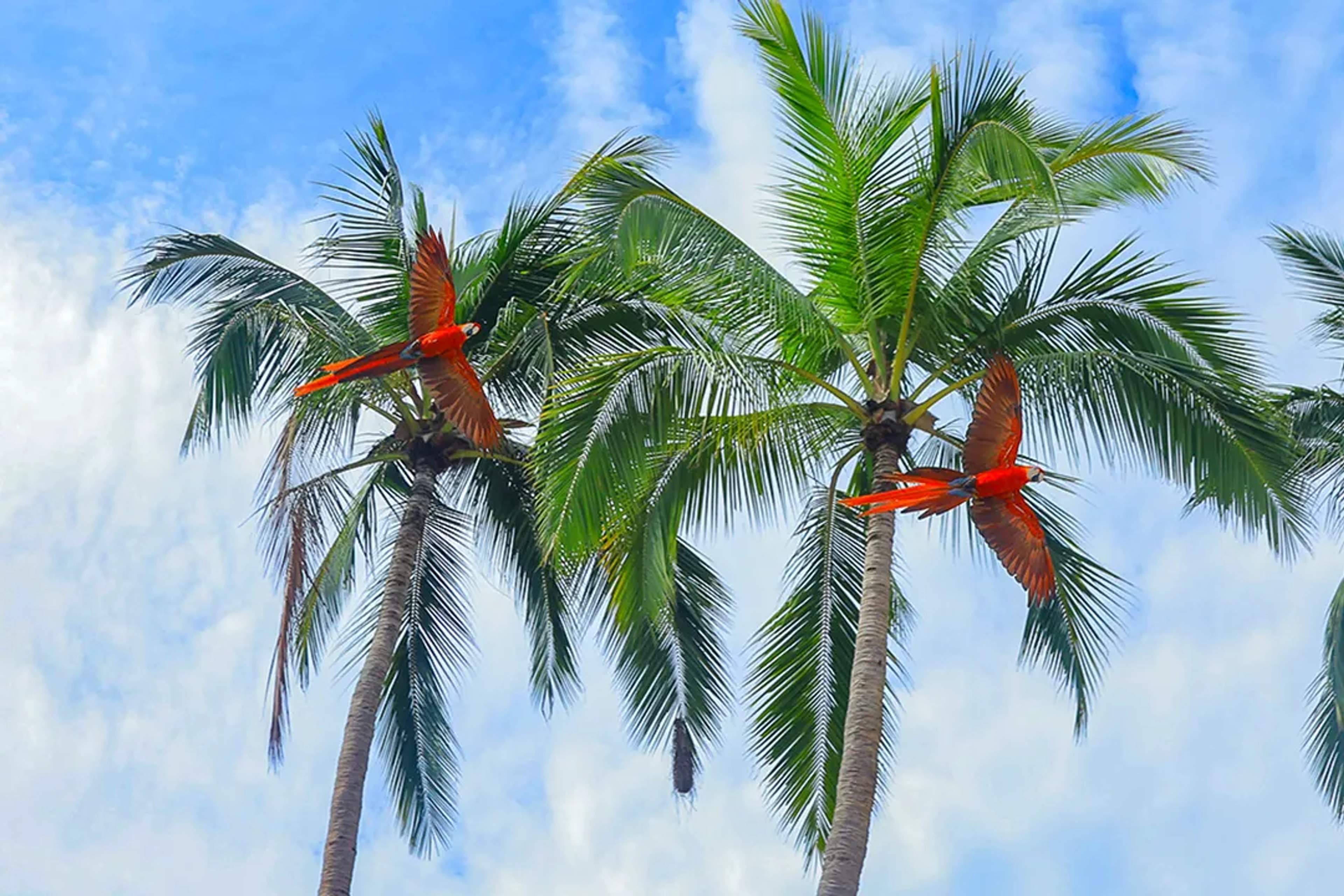
1. Macaws Are One of the World's Most Colorful Birds
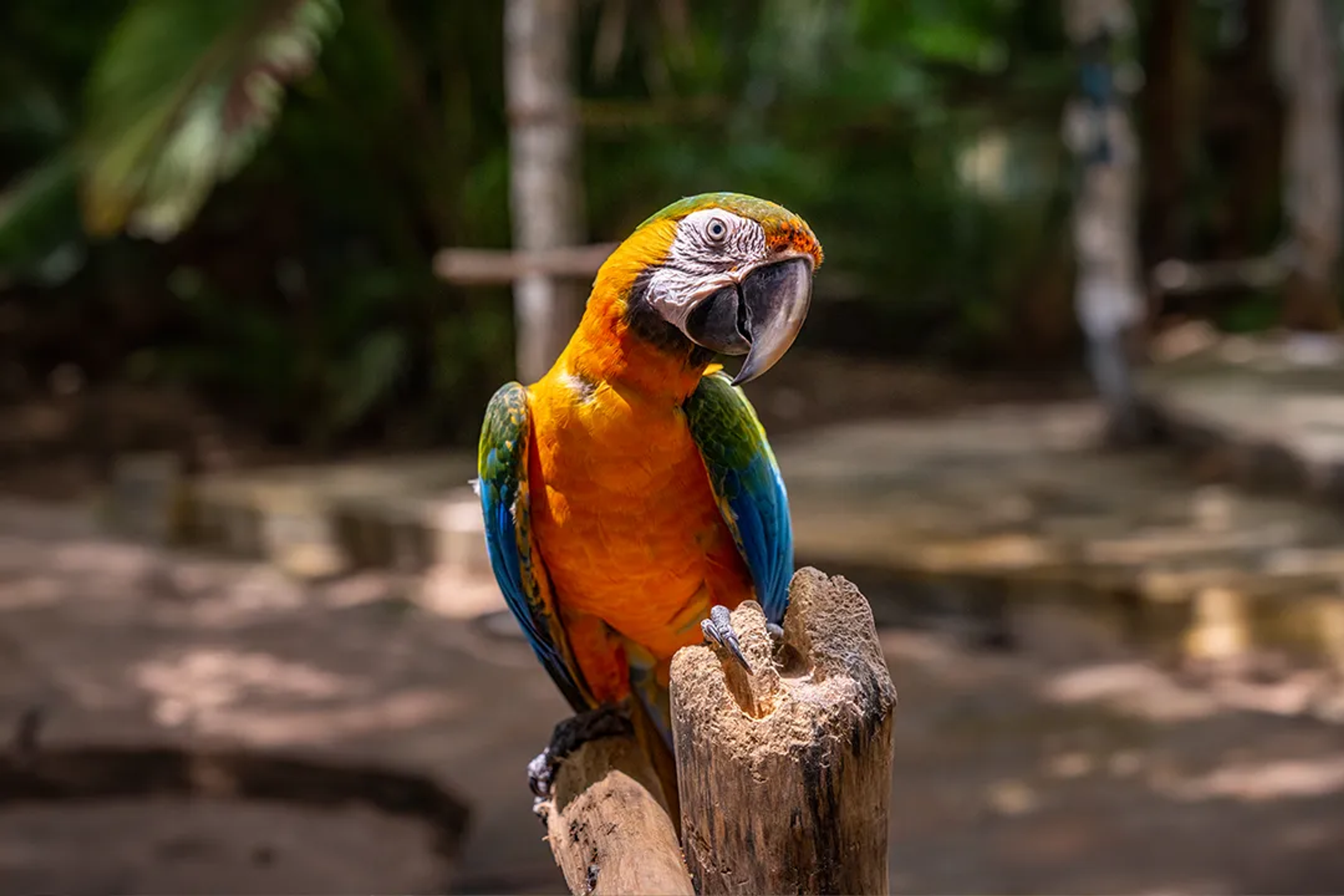
A scarlet macaw's red, yellow, and blue plumage looks like the opposite of camouflage. In the Amazon and other tropical forests, green leaves and red and yellow fruit help a perched bird disappear. Bluish shade adds to the cover.
Bright feathers signal health and help macaws choose mates. They also warn rivals off claimed territory.
The ancient Maya revered the scarlet macaw as a symbol of the sun, and in West Mexico the bird was associated with the sun, fire, lightning, the dry season, and rain. Scribes drew the macaw as a glyph read mo', which turns up in Maya royal names.
2. Macaws Mate for Life
Macaws typically mate for life. Bonded pairs share food and groom each other's feathers. The bond holds even in a large flock, where the two fly close together with their wings almost touching.
Most macaws travel in pairs or family groups. Flocks usually contain 10 to 30 birds, though military macaws sometimes gather in groups of up to 100. Watch a passing flock carefully, and you may be able to pick out the pairs.
3. Macaws Are the World's Largest Parrots
There are more than 350 types of parrots, with 389 parrot species recognized, and macaws top the size chart. The hyacinth macaw is the biggest of them all, about 39 inches, or more than three feet, from head to tail, up to 3.7 pounds (about four pounds), and spreading its wings more than 4 feet across; macaw wings can span up to 5 feet, or 60 inches.
The bird is solid ultramarine blue with a bare yellow ring around each eye and a yellow chin patch. The military macaw is a large, green bird found along Mexico's Pacific coast.
4. Macaws Can Live for Decades in the Wild
The average wild macaw lifespan is around 60 years, and under the right conditions, macaws can live up to 100. The real numbers are lower, and no verified longevity record supports the century claim.
Macaws are long-lived birds; their average lifespan in the wild is around 60 years, and they can live up to 100 years under the right conditions, though parrot lifespans rarely pass 50. A few parrots have reliable records into their sixties, but those birds are outliers.
5. Macaws Can Mimic Human Speech
Macaws near people often repeat words they hear, and they practice until they get the sound right. Parrots have a brain structure other birds lack, an outer shell around their vocal-learning core that drives the imitation. In the wild, the same skill lets a macaw copy the calls of its flock and its mate.
6. Macaws Are Among the Loudest Birds in the Rainforest
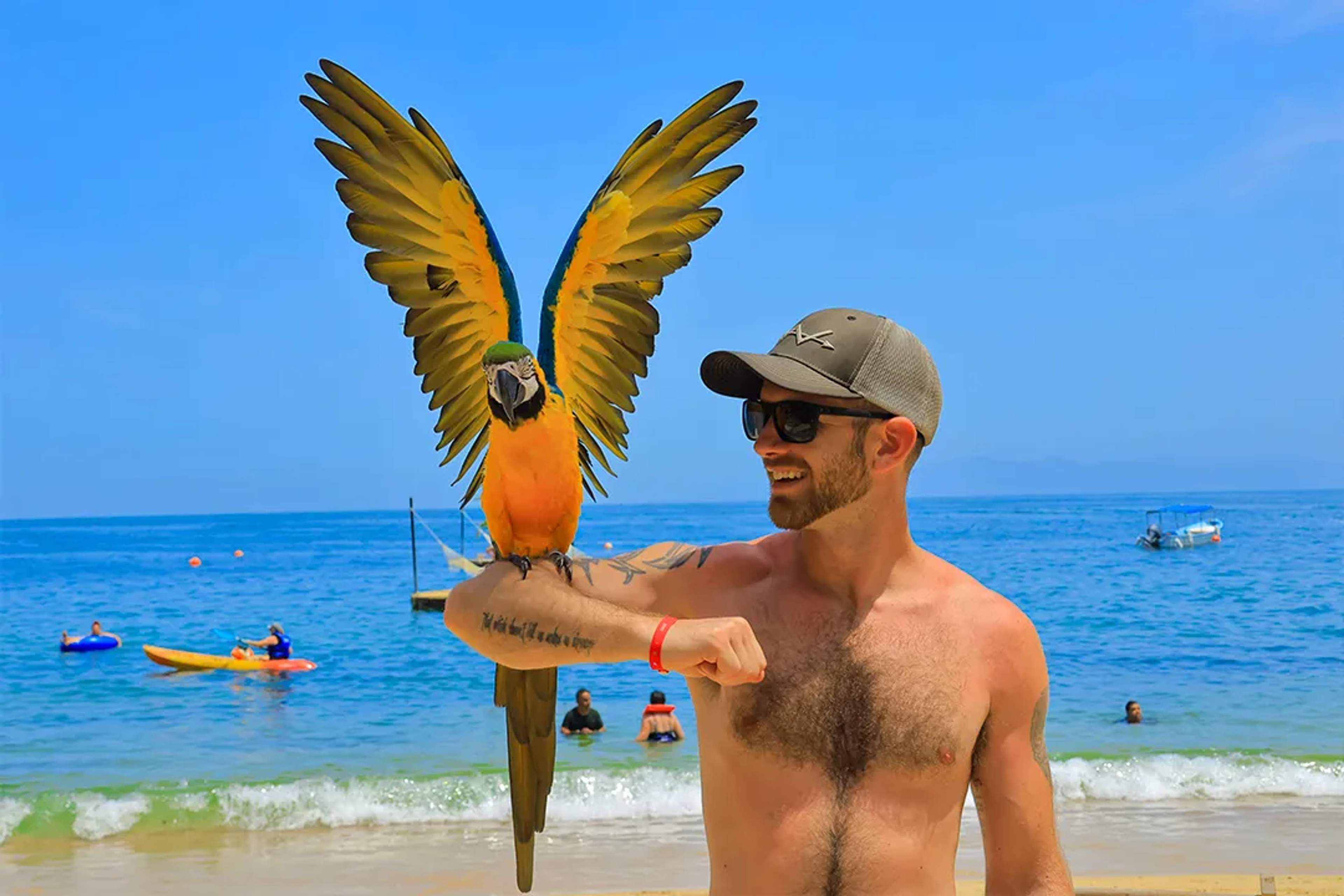
A macaw's scream is a natural call. Macaws scream to stay in touch and during play. They also use the call to mark territory, so if a raucous squawk echoes over the treetops, look up.
7. Macaws Call the Tropical Rainforest Home
Most macaws live in tropical rainforest and nearby woodlands, from Mexico through South America. In Mexico, the military macaw favors dry tropical forest and pine-oak highlands on the Pacific coast, while the scarlet macaw survives in the jungles of southern Mexico. Farther south, hyacinth macaws fill the forests and wetlands of Brazil.
Around Banderas Bay, the forested canyons of the Sierra Madre provide the same habitat.
8. Macaws Have Extremely Strong Beaks
The hyacinth macaw bites down harder than any other bird, hard enough to crack a Brazil nut or a person's knuckle. Macaws also have a far more defined craniofacial hinge than other prokinetic birds. That hinge is a true joint, so the upper beak rotates against the skull instead of sitting fixed to it.
9. Macaws Have Tongues Unlike Any Other Bird
A macaw's tongue is dry and slightly scaly. A bone inside it makes the tongue an excellent tool for breaking open and eating food.
10. Macaws Have Powerful Wings Built for Long Flights
Macaws fly as far as 15 miles a day to reach trees with ripe fruit, and scarlet macaws can reach around 35 miles per hour on wide, strong wings. From a canyon slope at dawn, you usually hear the pair before you see them, then two silhouettes cross the gap.
Where to Find Macaws Around Puerto Vallarta
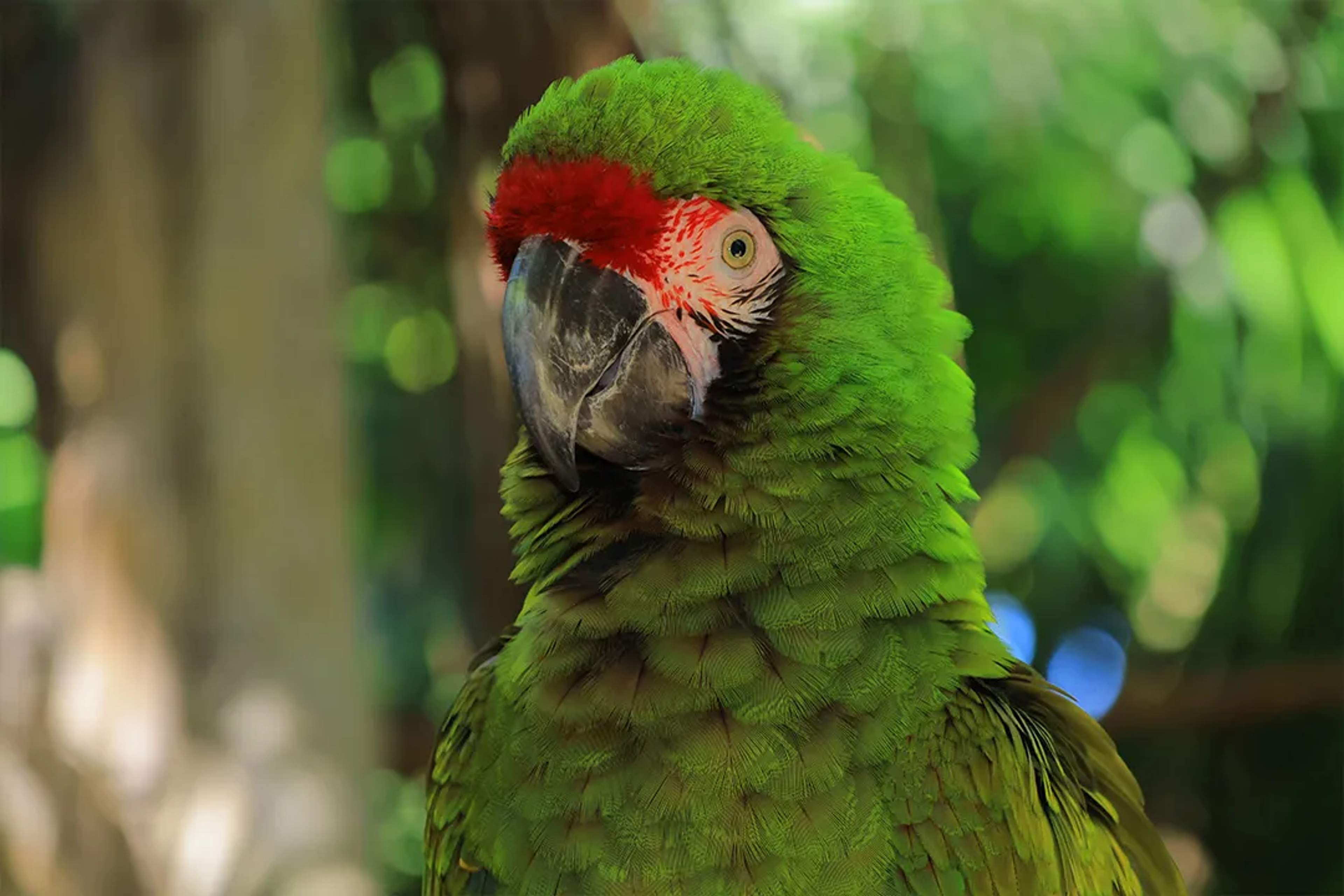
The military macaw, a green guacamaya with a red forehead and blue flight feathers, is the wild species here. It skips Central America entirely, and this stretch of Mexico's Pacific coast has the second-largest nesting population in the country.
A count once found 215 military macaws in a single roost in the coastal forest south of the bay, the biggest gathering documented for the species. Wildlife viewing here starts on the canyon slopes south of the city, where birders scan fruiting trees and listen for that call before the birds appear.
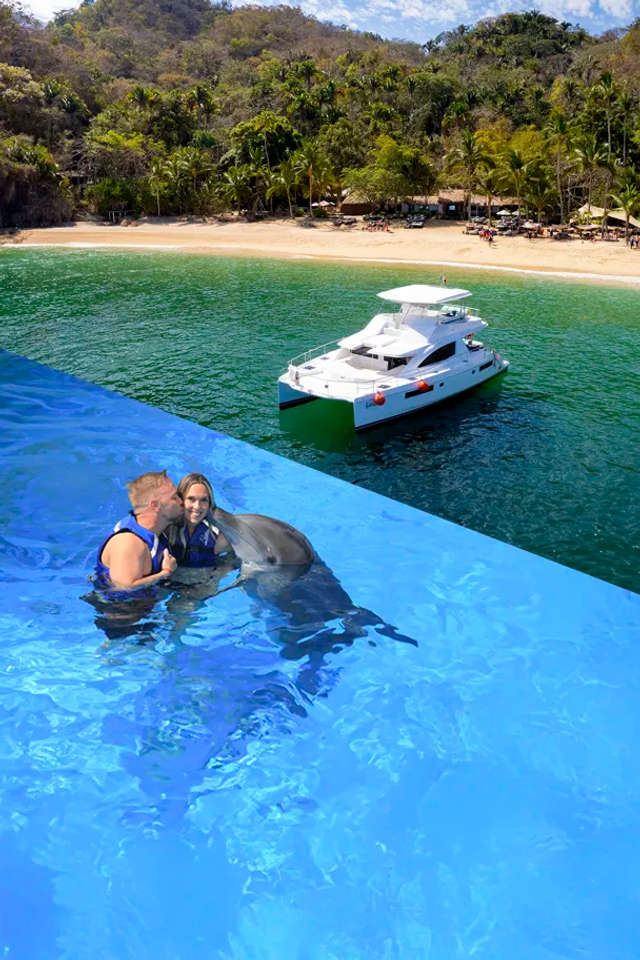
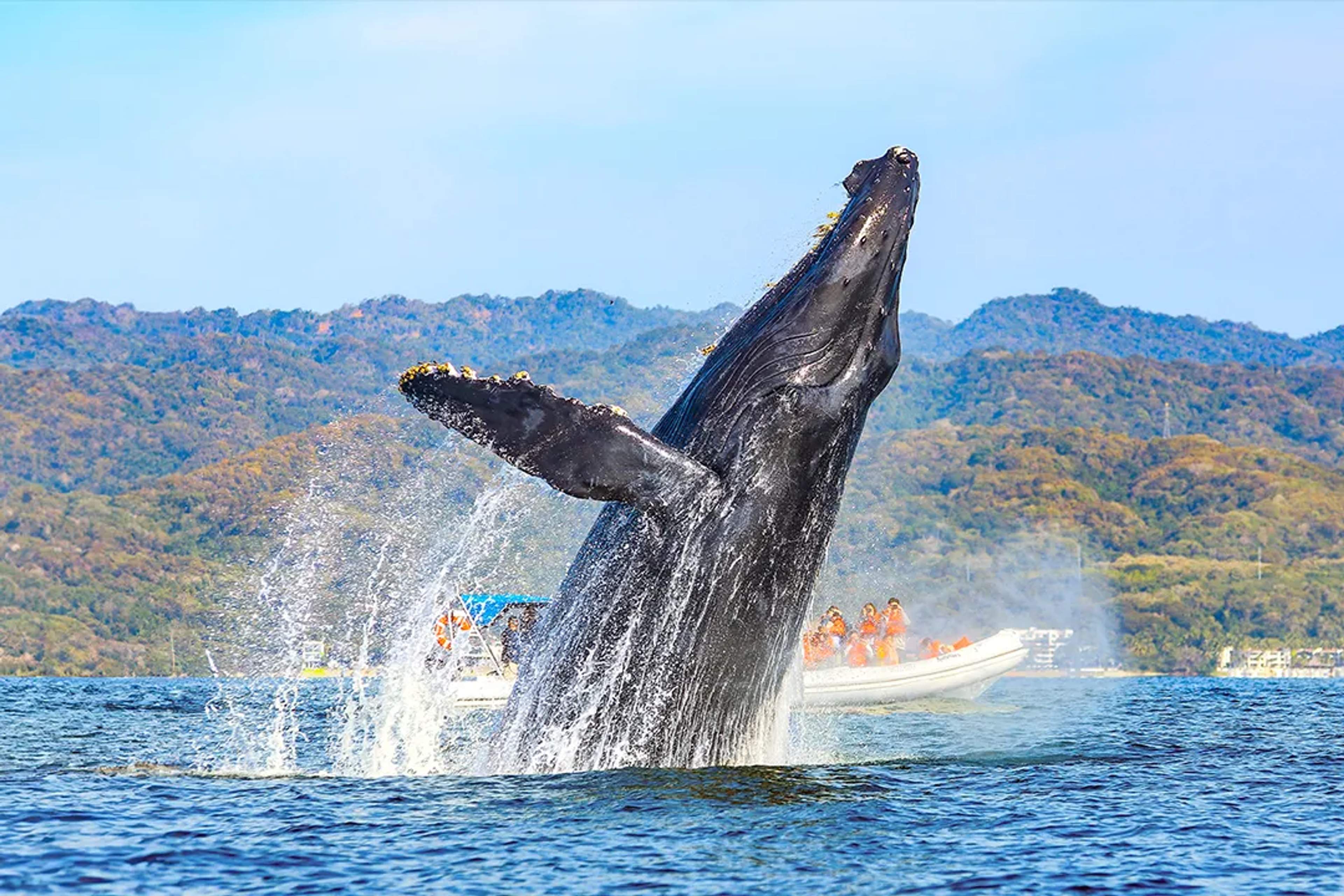
The bay also has dolphins and, in winter, humpback whales. We see them on the same water we cross to reach the macaws.
Come Make Friends With Vallarta's Macaws
Cross the Canyon Country by Zipline and Waterfall
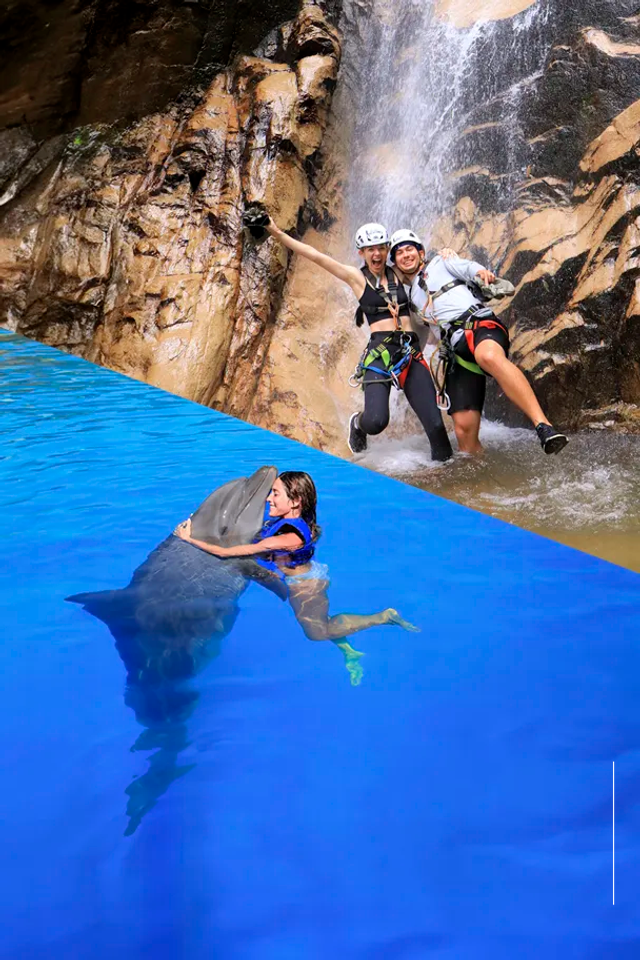
Feel the wind pick up as you cross Banderas Bay by speedboat and step into the same canyon country the macaws call home. You'll hike through tropical rainforest, fly on a zipline above the canopy, and stand under a waterfall as you rappel beside it. All of this is part of Outdoor Adventure, Ziplines & Waterfall, the simplest way to reach terrain you can't get to from the road.
Meet the Macaws and Flamingos at Las Caletas
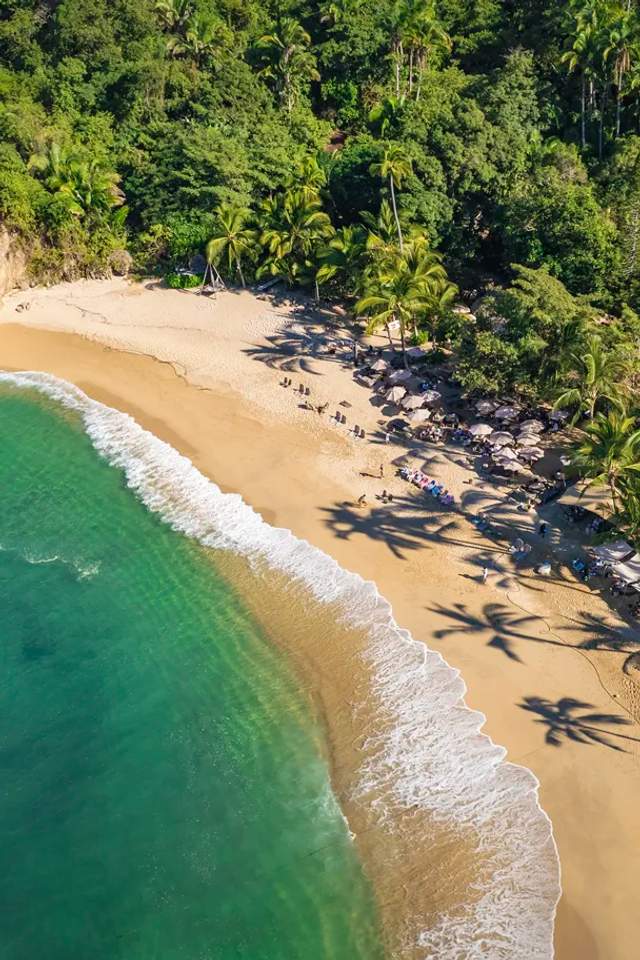
Picture a secluded cove reachable only by sea, hammocks strung over the waves, and clear water full of tropical fish. On a guided nature walk you'll come face to face with the resident macaws and flamingos, then head back for a buffet lunch and an open bar under the palms. That's a day at Las Caletas Beach & Adventure Park.
Frequently Asked Questions
What Do Macaws Eat?
Macaws are mostly plant eaters. They feed on fruit and nuts. Seeds are also part of their diet, and they fly long distances each morning to reach trees in fruit. For a traveler, a tree heavy with fruit is worth more watching than the sky above it.
Some macaws also eat mineralized clay and sand, which neutralizes toxins in the seeds they swallow. Blue-throated macaws spread seeds through the forest, which helps new trees take root.
What Time of Day Are Macaws Most Active?
Macaws use their loud calls to make contact with one another. Be out before the light comes up, and give yourself an hour of patience.
Listen first, scan afterward. Check trees in fruit rather than open sky. A distant pair reads as two dark shapes and a call carrying across a canyon, nothing more. A closer bird shows you the whole guacamaya. Its body is green, with a red forehead. Blue appears in the wings.
Are Macaws Endangered?
It depends on the species. The military macaw seen near Puerto Vallarta is vulnerable worldwide and endangered within Mexico, mainly because of habitat loss and the illegal pet trade. The scarlet macaw has also vanished from much of its former Mexican range.
Mexico has banned trade in wild-caught birds, and conservation work is paying off. Community programs in the mountains around Banderas Bay protect military macaw nests, and reintroduction projects have returned scarlet macaws to southern Mexico. Choosing responsible wildlife viewing and never buying a wild bird or feathers helps keep that recovery moving.
Is It Okay to Touch or Take a Selfie With a Wild Macaw?
No. A bad wildlife photo is one where the animal is held, touched, restrained, or baited to pose. A good one is taken from a respectful distance, with the bird moving freely in its own habitat.
Mexico has protected wild macaws. Watch them with guides who know how to keep a distance. A long lens or a guide's scope beats stepping closer, because a bird that flushes leaves you with a blurred photo and an empty tree. You'll come home with sharper pictures, and the birds will keep doing what makes them worth watching.