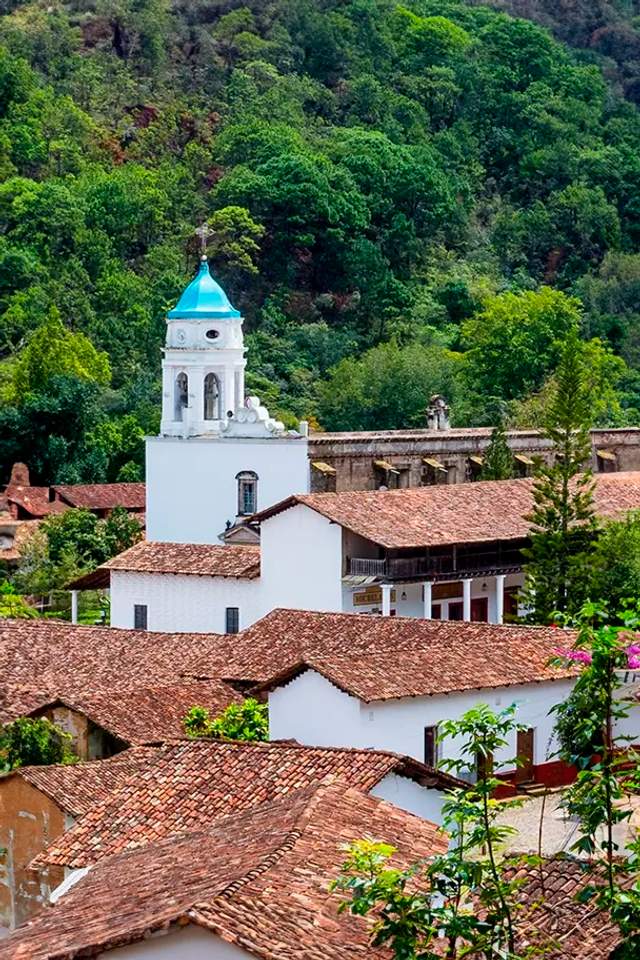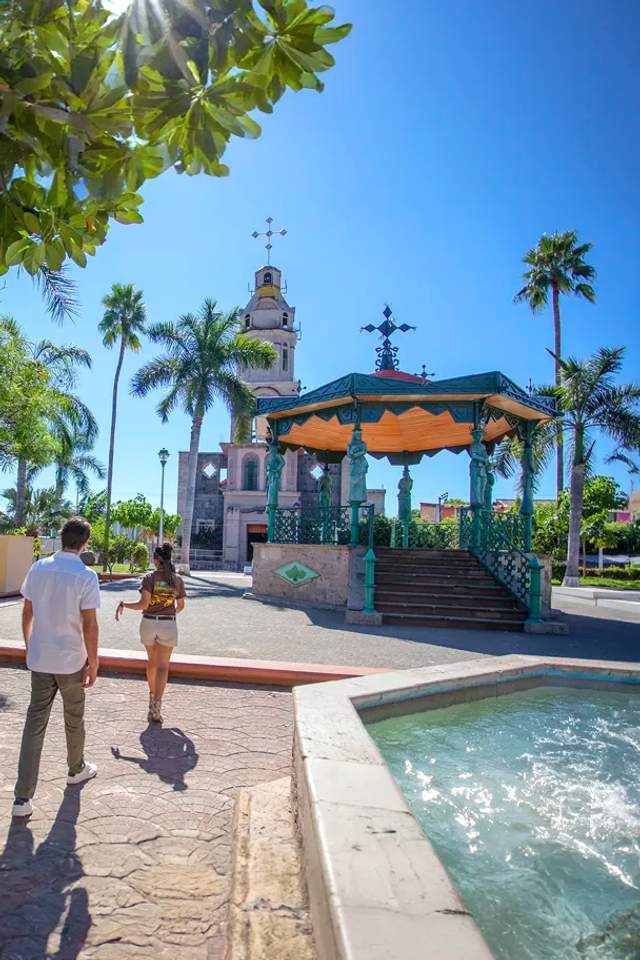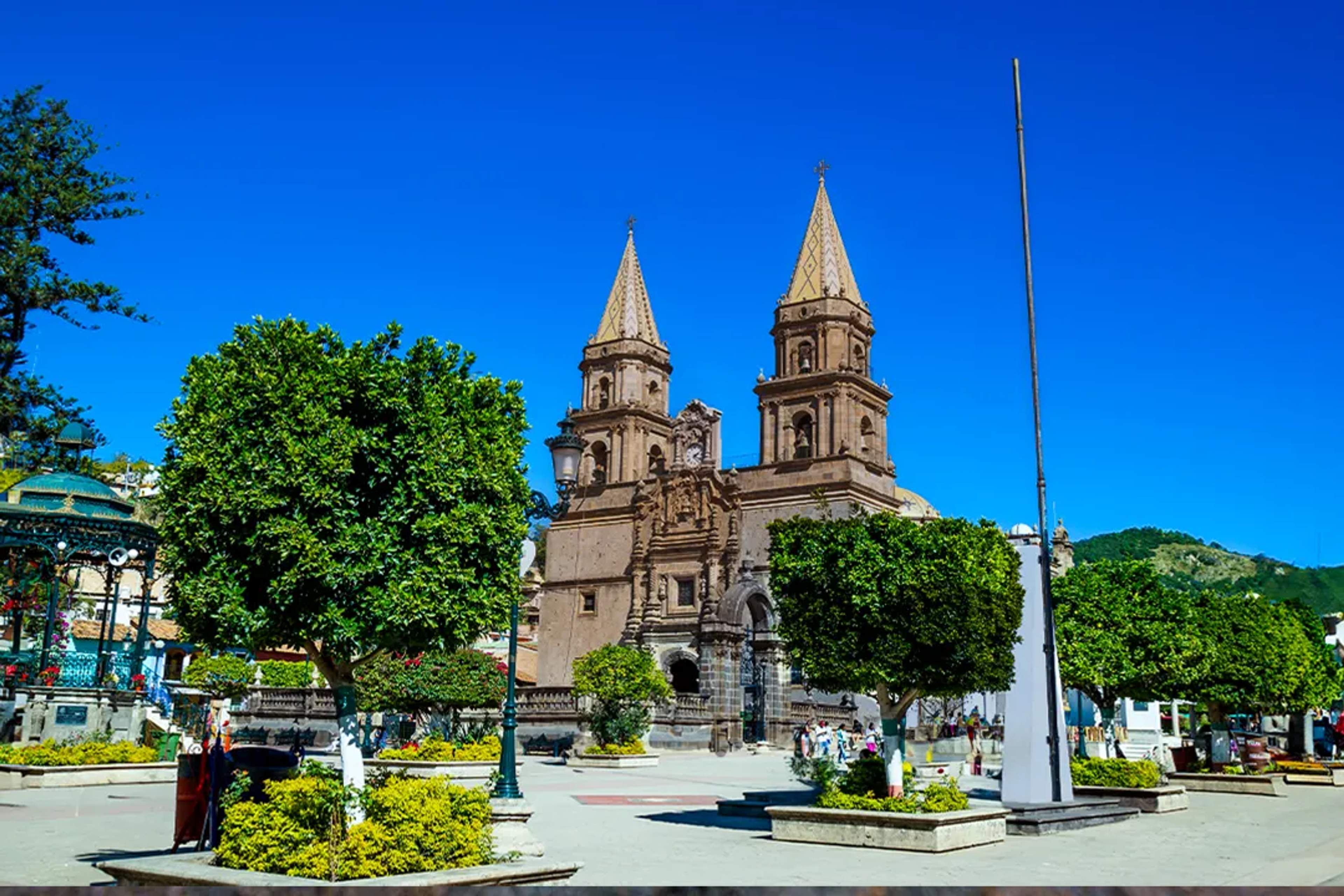
Talpa de Allende, Jalisco sits a few hours inland from Puerto Vallarta, high in the Sierra Madre's pine forests. It is a cooler, slower, more devout corner of the state, where cobblestone streets wind past a centuries-old basilica and the air carries the scent of guava sweets. If you want to see a side of Jalisco shaped by faith, craft and mountain quiet rather than ocean breezes, here is what to know before you go.
Where Is Talpa de Allende, Mexico?
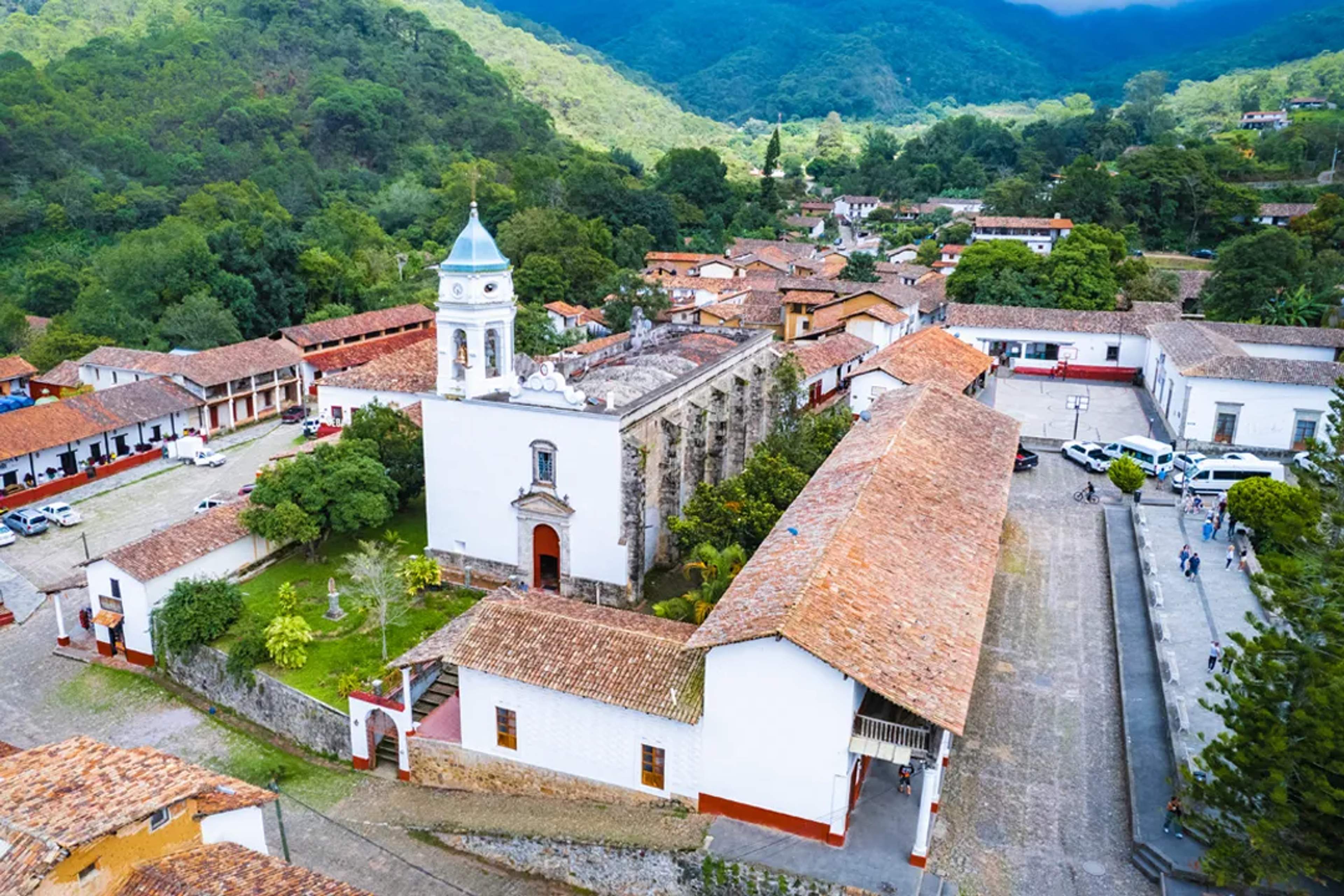
Talpa de Allende sits high in the pine-covered mountains of western Jalisco, roughly 125 to 133 km by road from Puerto Vallarta and about 190 km west of Guadalajara. Franciscan friars founded it in 1599, and it later grew into a silver-mining town.
It received Pueblo Mágico status in September 2015, mainly for its devotion to the Virgen del Rosario, which fills its streets with pilgrims.
Talpa is quiet and devout, and life moves slowly. Evenings keep a relaxed, family feel around the plaza, far from the Malecón's buzz.
A Pilgrimage Town Built Around Faith
Pilgrims arrive in waves around the feast days, filling the plaza. Brass bands lead groups carrying a large image of the Virgin into the plaza, rockets announce each arrival, and many walkers reach the altar on their knees. Some pilgrims fulfill their mandas by handing out water and oranges to other walkers, so hospitality has a religious logic.
Church bells ring from 26 September to 5 October and through the nine days after 10 September, and visitors leave offerings at the old well in the Capilla del Señor San José.
The Story of the Virgen de Talpa de Allende
Tarascan Indians from Michoacán (the Purépecha people) brought the image to Talpa in 1585 as a cane-paste figure. By 19 September 1644, it was worm-eaten and due for burial in the sacristy when, by tradition, a girl named María Tenanchi reached for it and saw it wrapped in light.
The vicar declared the figure renewed, now wood, and pilgrimages began the next year. Since then, people have come to pay "mandas," vows made to the Virgin, sometimes for healing.
What to Do in Talpa de Allende
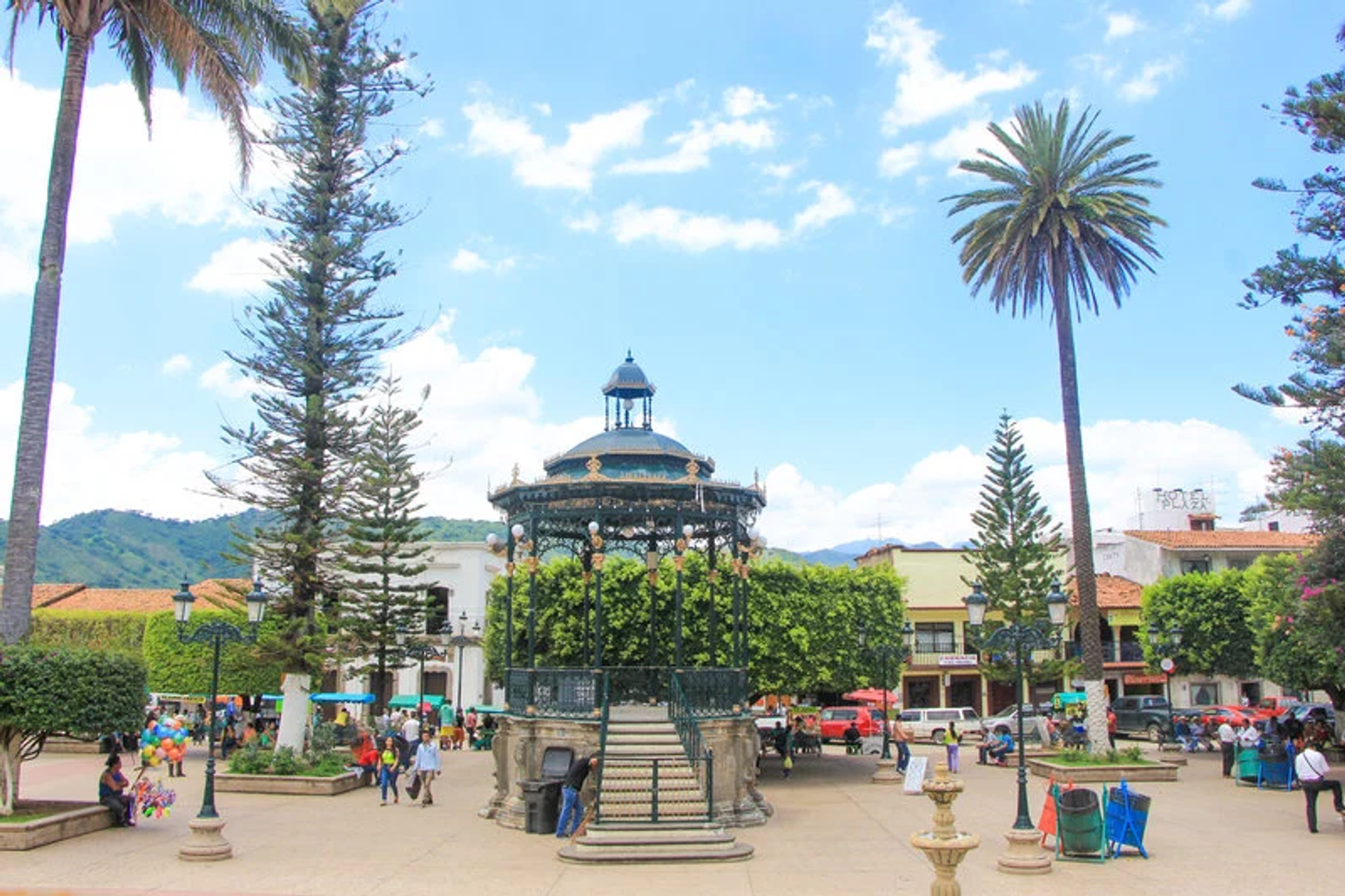
Most sights sit within a few blocks of the plaza, so park once and walk. A full day covers the churches, lunch and the viewpoint before the light fades.
1. Visit the Basilica of the Virgin of Talpa (Talpa Church)
The Basílica de Nuestra Señora del Rosario, finished in 1782, is the gray cantera church with tall towers on the plaza. Inside, stained glass and paintings of the four evangelists lead to the gilded retablo holding the Virgin, and entry is free. Behind it, the Museo de Nuestra Señora del Rosario shows gold-embroidered garments and old parchments for a small fee, Tuesday to Sunday, 9 a.m. to 2.30 p.m.
2. Walk Through La Calzada de las Reinas
Pilgrims who cross the Cruz de Romero hill enter town along the Calzada de las Reinas, a cantera walkway built in 2004. Sculptures of Mexico's Virgins line it, including Guadalupe and Zapopan. It also represents San Juan de los Lagos. Start here rather than at the plaza to walk in step with the pilgrims who made Talpa's name.
3. Leave an Offering at the Virgin Mary Statues
On feast days, arriving groups carry red and orange flowers up to the basilica doors and into the church. If you bring a candle or flowers, leave them quietly and step aside for anyone praying.
4. Watch the Procession of the Virgin of Talpa
Four times a year the image is carried around the plaza, on 1 February, 12 May, 10 September and 7 October. On those days pilgrim groups arrive behind brass bands and rockets, often carrying their own large image of the Virgin. 7 October is the Virgen del Rosario's own feast day, when neighborhood pilgrimages arrive at the church, and lodging can be tight.
On 10 September the procession crosses a carpet of sawdust and wildflowers that residents organize, and the Virgin is then bathed and re-dressed. Arrive early to see the carpet intact.
5. Experience the Pilgrimage of the Virgen de Talpa
The pilgrimage runs 11 to 19 March, around the feast of San José, the municipality's patron, when pilgrims walk over the mountains to pay their mandas and ask the Virgin for favors. Many arrive after 117 km on the Ruta del Peregrino from Ameca; others after five days on foot from Puerto Vallarta (three for a strong walker).
Semana Santa draws even bigger crowds. Both weeks are moving but hard on logistics, so book ahead or visit on either side of them.
6. See the Old Chapel and Its Sacred Well
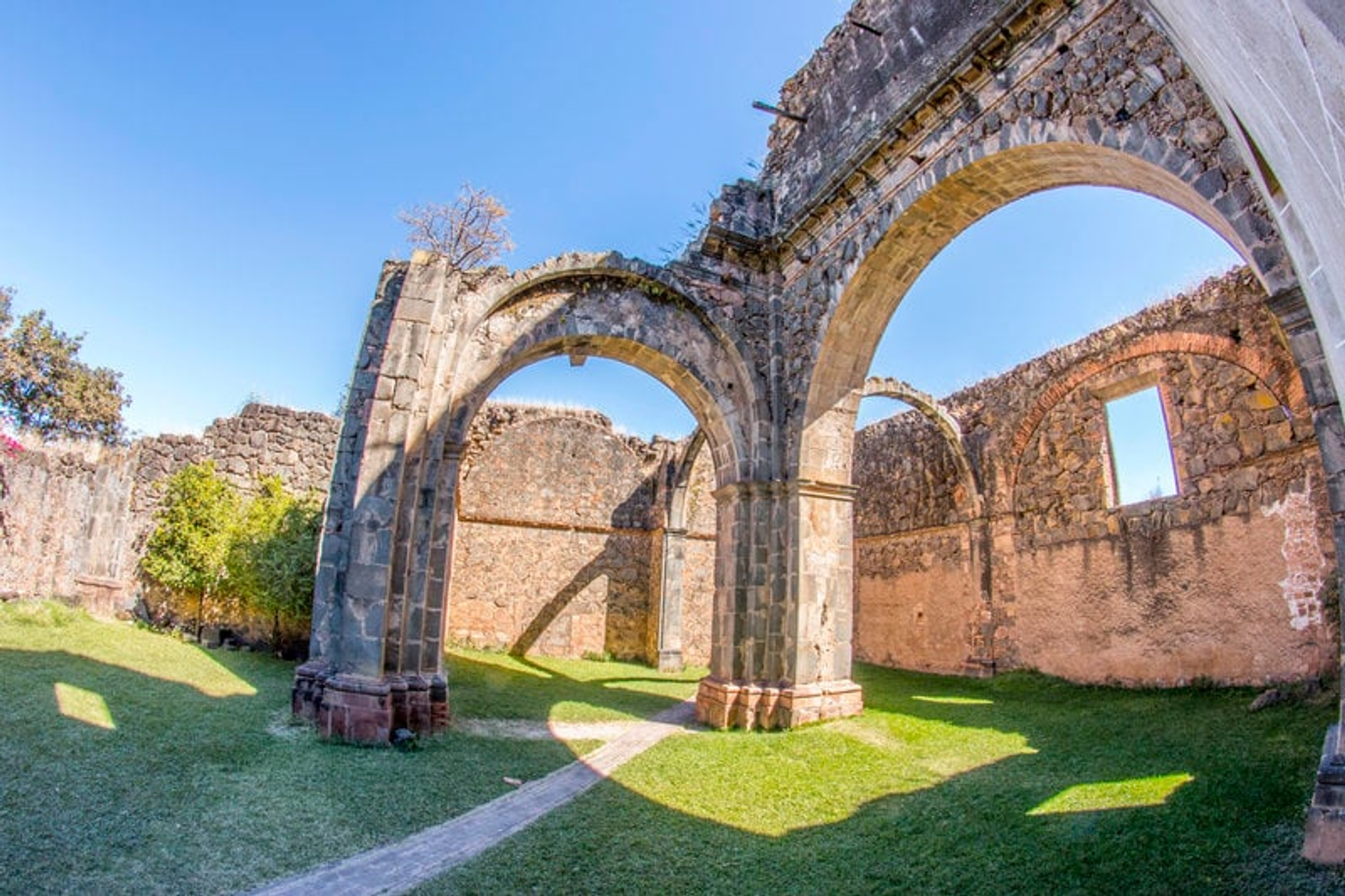
Locals consider the Capilla del Señor San José one of Talpa's most sacred spots because the Virgin was kept here before the basilica.
Inside is an old well that was never filled in, where visitors still leave offerings. We recommend stopping here before the basilica.
7. Stroll the Cobblestone Streets of Talpa
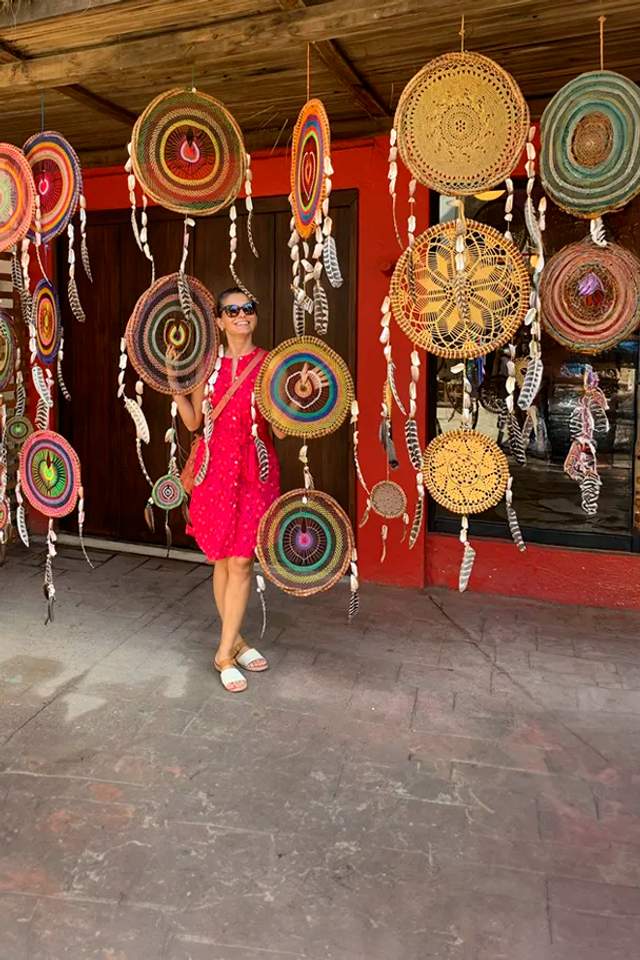
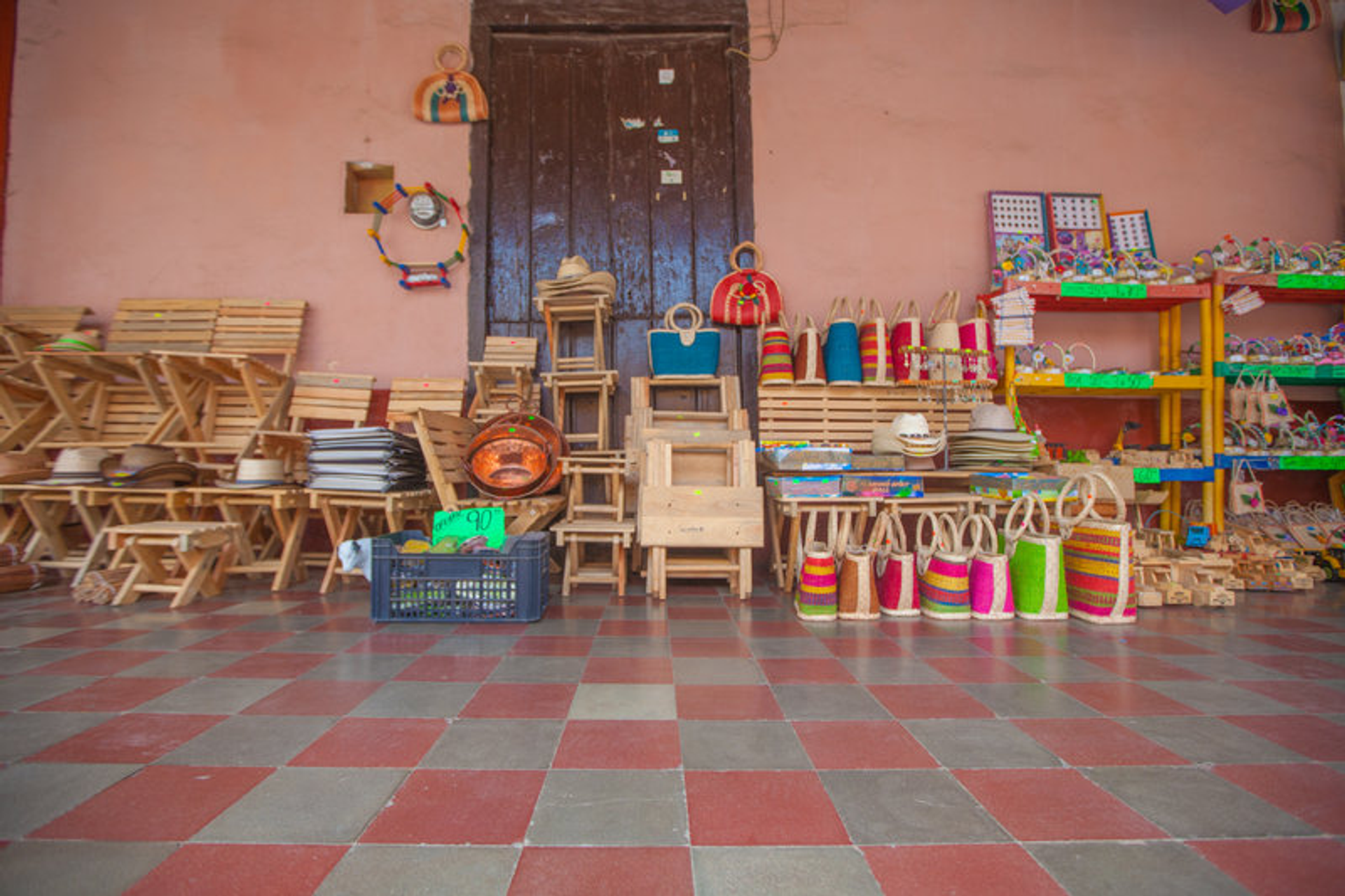
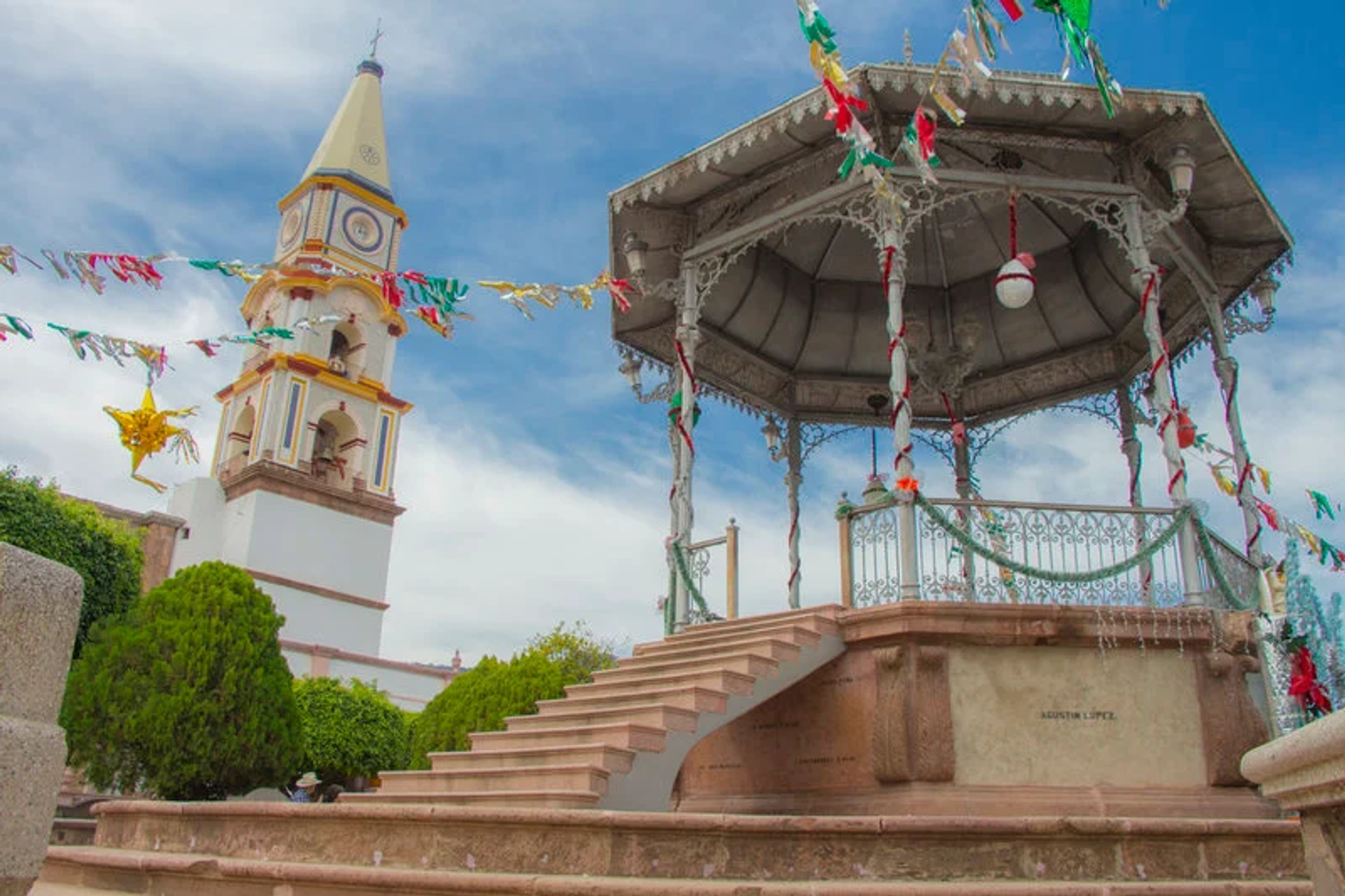
Give yourself an hour to wander. The streets are cobbled, the houses tile-roofed and multicolored, and the plaza smells of guava sweets. Stalls under the market portales sell chicle crafts, and vendors sell handmade tortillas.
8. Try Tejuino, a Traditional Fermented Corn Drink
Traditional tejuino is a lightly fermented, pre-Hispanic corn drink. In Jalisco, people make it from nixtamal masa and piloncillo, leave it in a clay pot for two or three days, then serve it cold with salt, lime and chile or top it with lime sorbet. After a morning on the cobblestones, it hits the spot like a cold beer on the beach.
9. Visit Talpa's Candy Factory
Guava roll factories cluster in the town center, including Fábrica de Rollo de Guayaba Talpa at Calle Independencia 4, plus others on Degollado and Anáhuac. Traditionally, people stir rollos by hand in copper pots with wooden paddles, and the sweet smell of guava drifts into the streets. Rolls cost about 10-50 pesos each.
10. Taste the Guava Roll
Rollo de guayaba has two ingredients, guava pulp and sugar in roughly equal parts. The mix cooks in a copper pot for an hour or more until thick, rests overnight on a sugared board, then is rolled, sometimes around cajeta, pineapple or dulce de leche. Try the plain roll first to taste the fruit. Sugar-free versions are also sold.
11. Try Talpa's Chewing Gum
Chilte is one of Talpa's signature sweets, and the craft draws on a pre-Hispanic technique; the word chicle itself comes from Náhuatl. Artisans collect it as tree sap from a diagonal cut in the bark, then heat it with water and stretch it by hand.
Artisans dye it with local plants, flowers and minerals and shape it into sombreros, baskets, flowers and cathedrals. It lacks a sugary taste and has a characteristic earthy smell.
12. Take In the Sierra Madre Mountain Views
From the basilica, calle del Cerrito climbs for 10 to 20 minutes to the Cristo Rey mirador. The last stretch is a flight of steps, worth it for the view over tile roofs, the towers and the pine ridges ringing the valley. Bring a sweater, since the mirador sits several degrees cooler than the coast, and go before it closes at 6 p.m.
When is the Best Time to Visit Talpa de Allende
December to February is dry and cool, about 24 to 25°C (75 to 77°F) by day and near 12°C (54°F) at night, noticeably cooler than the coast, especially after dark.
March and April are warm and the driest months, with clear skies for the mirador, and May turns hotter before the rains. June to September is rainy and green, and rain can slow traffic.
Feasts cluster from February to May and September to October, and hotels fill during Semana Santa. November and December offer dry weather without a major pilgrimage. We like November for its dry roads, and the Feria de la Guayaba brings a festival late in the month.
How to Get From Puerto Vallarta to Talpa de Allende
Car and bus follow the same mountain road through Pueblo Mágico Mascota. Budget closer to three hours each way with stops, and leave early.
Driving to Talpa de Allende
Take Highway 200 toward Las Palmas, then state road 544. The road narrows into switchbacks before La Estancia, where San Sebastián del Oeste branches left, and the main road continues right to Mascota. From Mascota, road 527 covers the last 25 km.
Taking the Bus to Talpa de Allende
Autotransportes Guadalajara Talpa Mascota (ATM) runs this route. The ride takes 2.5 to 4 hours. Fares run about 130 to 200 pesos each way.
Buses leave from a small terminal at the corner of Calle Lucerna and Calle Havre in Colonia Versalles, with three to five departures a day. Timetables vary, so confirm times at the terminal or buy tickets online a day ahead. The last bus back from Talpa leaves around 5 p.m.
Can You Visit Talpa de Allende as a Day Trip?
You can, but the round-trip drive leaves only a few hours in town, and the bus timetable cuts that further. A rushed visit means missing the evening on the plaza.
We recommend one night. Hotels near the basilica include Doña Francisca Hotel Boutique and Hotel Arboledas, so you can see the church before day visitors arrive and return to the plaza at dusk.
Explore Another Pueblo Mágico: San Sebastián del Oeste
For a guided Sierra Madre day, the San Sebastián del Oeste trip reaches another Pueblo Mágico about 90 minutes from Puerto Vallarta. Founded in 1605 as a silver settlement, it has mud-brick walls, tile roofs, an 18th-century church, a guided walk, a silversmith workshop, farm coffee, tequila tasting and lunch.
Carry the Mountain Home
Talpa stays with you after you leave, in the cool air, the slower pace, and the quiet rhythm of a town that moves to its own calendar. Whether you come for a day or linger overnight, the Sierra rewards unhurried travelers.
When you are ready to plan the rest of your trip, browse our full lineup for more ways to see this corner of Jalisco.
FAQs About Talpa de Allende, Jalisco
Are there flights to Talpa de Allende?
No. Talpa has no commercial airport or scheduled flights, so you'll get there by road. Puerto Vallarta's airport (PVR) is the nearest major one, about 122 km from Talpa, and from there you can drive or take a regional bus through Mascota. Guadalajara's airport also works, but the drive from that side is longer.
Is Talpa de Allende safe?
Check your own government's current advisory before you go. The US State Department rates Jalisco Level 3 ("Reconsider travel") and does not name Talpa, Mascota or San Sebastián as restricted areas. Most visits to Talpa center on the basilica, the plaza and the sweet shops.
Roads to Talpa and Mascota were affected by blockades in February 2026, so check conditions the morning you leave, drive in daylight and stay on the main road through Mascota.
How far is Talpa de Allende from Puerto Vallarta?
Talpa is about 125 to 133 km from Puerto Vallarta by road, roughly two and a half hours by car (closer to three with stops) and two and a half to four hours by bus. The curves and climbs stretch travel time beyond what the map suggests, so we recommend staying overnight rather than racing back.
Is Talpa de Allende a Pueblo Mágico?
Yes. Talpa received the designation in September 2015 for its religious tradition, centered on the Virgen del Rosario, and its mountain scenery.
It shares the label with two nearby Sierra towns, Mascota and San Sebastián del Oeste. This corner of Jalisco has an unusual concentration of recognized towns. Talpa is the pilgrimage town, San Sebastián del Oeste the old silver town, and Mascota, known as La Esmeralda de la Sierra, sits between them.
What should I wear when visiting the Talpa church?
General Catholic church etiquette applies. Modest dress works best: cover your shoulders and knees, and keep a light scarf handy over a sleeveless top. Men should remove hats upon entering, and visitors should silence phones and avoid photographing people during prayer. Outside, wear grippy shoes for the cobblestones and viewpoint stairs, plus a hat for the midday sun and a sweater for cool evenings.
Can I visit Talpa de Allende, Mascota, and San Sebastián del Oeste on the same trip?
Yes. All three sit on the same mountain road from Puerto Vallarta, with San Sebastián first at a junction near La Estancia, then Mascota, then Talpa at the far end.
Doing all three in one day means more driving than sightseeing, so spread them over two or three days, for example, a night in San Sebastián, a stop in Mascota and a night in Talpa. For a simpler start, join our guided day trip to San Sebastián del Oeste and plan Talpa as a separate overnight.
Where can I stay overnight in Talpa de Allende?
Talpa has many hotels along its main street, several within a short walk of the basilica. Options include simple guesthouses, apartments with kitchens such as Departamentos Anahuac, and the pet-friendly Hotel Providencia.
Book well ahead around the feast days, when pilgrims fill the rooms. Hotels in Mascota make a good backup base, and the municipal tourism office at Calle Independencia 32 is open weekdays and can answer questions before you go.
What food should I try in Talpa de Allende?
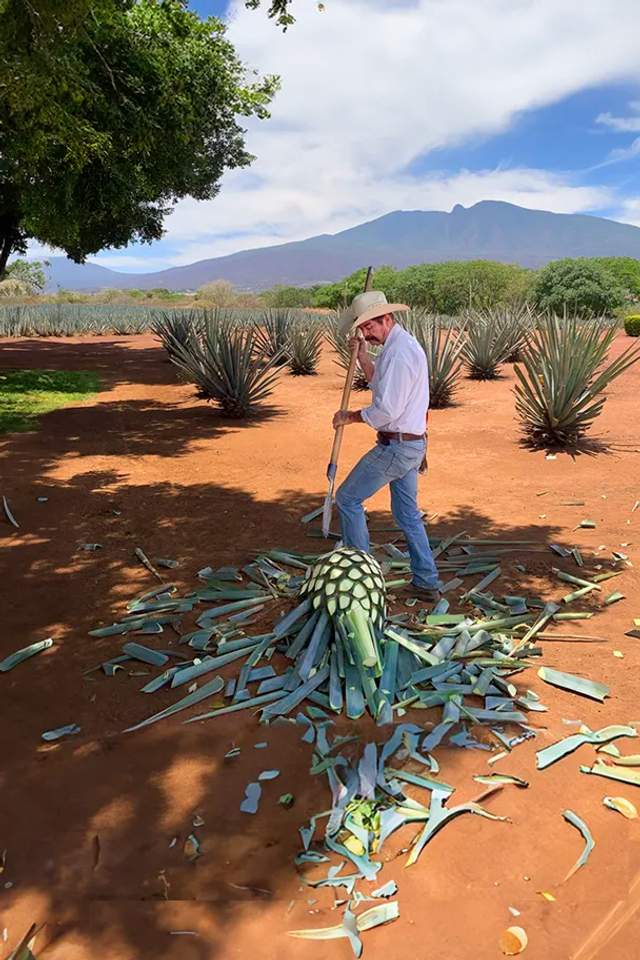
Start with the sweets. Try guava roll, guava leather, mango roll and chilte, the natural chewing gum shaped into little figures, plus a cold tejuino on a warm afternoon. The municipal market serves goat birria, and restaurants around the center offer pozole, gorditas, picaditas and tamales.
Talpa grows its own shade coffee, and cinnamon infusion with rompope is a local cold-weather drink. Raicilla is the regional spirit nicknamed the pilgrim's drink.